

How Much Do Dental Veneers Cost in NYC? What to Expect in 2026
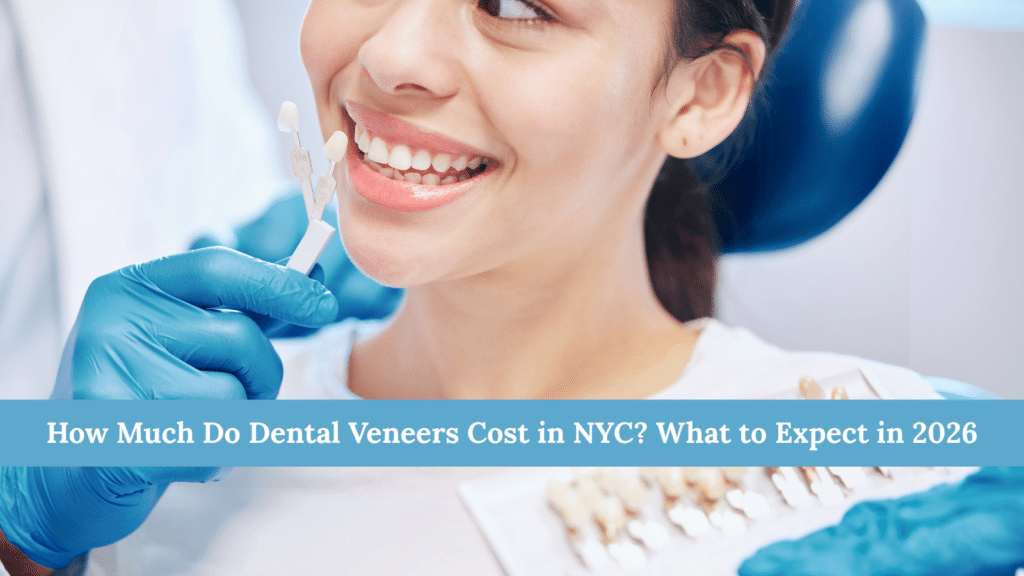
If you have been researching porcelain veneers in Manhattan, cost is probably one of the first questions on your mind. It is also one of the most common questions cosmetic dentists hear, and one of the least transparently answered on most dental websites.
This guide gives you a clear, honest look at what veneers cost in New York City in 2026, what drives the price up or down, and what separates a veneer treatment that lasts from one that disappoints. By the end, you will have everything you need to evaluate your options and ask the right questions at your consultation.
Porcelain Veneer Cost in NYC: At a Glance
| Veneer Type | Cost Per Tooth (NYC) | Expected Longevity |
|---|---|---|
| Porcelain Veneers | $2,500 - $3,500 | 10 - 20 years |
| Composite Veneers | $800 - $1,500 | 3 - 7 years |
| Minimal-Prep / No-Prep Veneers | $1,500 - $2,500 | 5 - 15 years |
Pricing reflects current Manhattan cosmetic dental market rates. Individual treatment plans vary based on case complexity, number of teeth, and provider.
Why Do Veneer Prices Vary So Much?
Two practices in the same zip code can quote very different prices for the same procedure. That is not unusual; it reflects real differences in how veneers are made, placed, and supported. Here is what actually drives the cost.
The Dental Laboratory
Porcelain veneers are custom-fabricated by a dental ceramist, not manufactured at the dental office. Premium laboratories, particularly those that specialize in aesthetic restoration, charge significantly more than lower-cost offshore labs. The difference shows in fit, translucency, and how naturally the final result blends with your surrounding teeth.
The Clinician's Skill and Specialization
Cosmetic dentistry is not a recognized specialty under the American Dental Association, meaning any general dentist can offer veneers. The difference between a dentist with advanced post-graduate cosmetic training and one without it is not visible on a fee schedule. It becomes visible in the result. At JCL Dental, Dr. Lattinelli brings decades of cosmetic dentistry experience on the Upper East Side, with a patient population that expects and receives high-quality outcomes consistently.
Digital Planning and Smile Design
Practices that invest in digital smile design technology (including digital X-rays, intraoral scanning, and preview imaging) are giving patients something valuable before any tooth preparation begins: the ability to see and approve a simulation of the final result. This adds time and overhead to the process, and it is reflected in the fee.
Geographic Location
Manhattan is among the most expensive dental markets in the country. Overhead costs (real estate, staffing, lab fees, continuing education) are higher than in most other markets. A fee that seems elevated compared to suburban or out-of-state providers is often a fair reflection of that reality, not an inflated margin.
Types of Veneers: Understanding the Difference
Porcelain Veneers
Porcelain veneers are the gold standard of cosmetic dental restorations. They are fabricated from dental-grade ceramic in a specialized lab, custom-matched to your desired shade and shape, and bonded permanently to the front surface of your teeth. Porcelain mimics the light-reflecting properties of natural enamel; no other material looks quite as lifelike under real-world lighting conditions.
Placement typically requires two appointments: one for preparation and impressions, and one for bonding. A temporary veneer protects the tooth in between. With proper care, porcelain veneers last 10 to 20 years.
Composite Veneers
Composite veneers use a tooth-colored resin material applied and sculpted directly at the chair, the same material used in cosmetic bonding. They are faster, require no lab time, and cost significantly less than porcelain. The tradeoff is longevity: composite is more prone to staining and chipping over time and typically needs replacement or touch-up within three to seven years.
Composite veneers are a reasonable starting point for patients who want a meaningful cosmetic improvement at a lower upfront cost, particularly for isolated corrections like a single chipped tooth.
Minimal-Prep and No-Prep Veneers
Traditional veneer placement involves removing a thin layer of enamel from the tooth surface to accommodate the veneer's thickness. Minimal-prep and no-prep veneers are designed to work with little or no enamel removal, which makes them appealing to patients who are hesitant about the irreversibility of the process.
However, these veneers are not appropriate for all cases. They work best when the teeth being treated are already well-positioned and require only minor cosmetic refinement. For patients with more significant concerns, attempting a no-prep approach can result in restorations that look thick or unnatural. Your dentist should evaluate your candidacy carefully.
Does Dental Insurance Cover Veneers?
In most cases, no. Dental veneers are considered elective cosmetic procedures, and standard dental insurance policies exclude them. If a veneer is placed for restorative reasons (to protect a severely damaged or fractured tooth, for example), a portion of the cost may be covered under your restorative benefits. This is the exception, not the rule, and requires documentation of clinical necessity.
At JCL Dental, our team is happy to review your coverage with you and identify any restorative benefits that may apply to your specific treatment plan.
Financing Your Veneers in Manhattan
Most patients do not pay for a veneer case out of pocket in a single payment. Dental financing has become standard practice for elective cosmetic treatment, and several options make the investment more manageable.
- CareCredit and Lending Club Patient Solutions offer extended payment plans, often with promotional low- or no-interest periods for qualified applicants.
- In-house payment plans vary by practice. Ask at your consultation whether the office offers a structured payment arrangement.
- FSA and HSA funds can sometimes be applied to dental treatment. While cosmetic procedures are generally excluded, check with your plan administrator if any portion of your treatment has a restorative component.
What to Expect at Your Veneer Consultation
A thorough veneer consultation at JCL Dental is not a sales appointment. It is a clinical evaluation that determines whether veneers are the right treatment for your goals and, if so, how many teeth need to be addressed, what preparation is required, and what the realistic outcome looks like.
Dr. Lattinelli will review your dental and medical history, examine the health of your gums and existing teeth, and discuss what you want to change about your smile. In many cases, digital imaging allows you to preview a simulation of the proposed result before any treatment begins.
Come prepared to talk about your goals; bring photos of smiles you admire if that helps communicate what you are looking for. The more clearly you can articulate what you want, the better equipped your dentist is to build a treatment plan that delivers it.
How to Choose the Right Cosmetic Dentist for Veneers in NYC
Not every dentist who offers veneers has the training, eye, or laboratory relationships to deliver consistently excellent results. When evaluating a cosmetic dentist for a veneer case, consider the following.
- Before-and-after cases: Ask to see actual patient cases (not stock images) from the practice's portfolio.
- Post-graduate cosmetic training: Look for documented continuing education in cosmetic dentistry, smile design, or aesthetic restorations.
- Lab relationships: Ask which laboratory fabricates their veneers and whether the ceramist has a specialty in aesthetic work.
- Consultation approach: A dentist who listens carefully, evaluates your candidacy honestly, and explains alternatives when appropriate is operating in your interest.
Frequently Asked Questions
How long do porcelain veneers last?
With proper care (regular brushing, flossing, and dental check-ups), porcelain veneers typically last 10 to 20 years. Avoiding habits like biting fingernails, chewing ice, or using your teeth to open packaging will extend their lifespan considerably.
Are veneers permanent?
Porcelain veneers require the removal of a thin layer of enamel, which is permanent. The tooth will always need to be covered with a restoration going forward. This is why candidacy evaluation matters: veneers are not the right choice for every patient, and a good cosmetic dentist will tell you when another treatment is more appropriate.
Do veneers look natural?
When placed by an experienced cosmetic dentist using a high-quality dental laboratory, porcelain veneers are virtually indistinguishable from natural teeth. Shade, shape, translucency, and surface texture are all customized to blend with your surrounding dentition. The result should look like the best version of your natural smile, not a cosmetic overlay.
How many veneers do I need?
Most full-smile cases treat the six to ten teeth visible in a natural smile. For isolated corrections (a single chipped tooth, one slightly misaligned tooth) as few as one or two veneers may be appropriate. Your dentist will recommend the number based on your specific goals and anatomy.
Is the veneer process painful?
The tooth preparation appointment is performed under local anesthesia, so discomfort during the procedure is minimal. Some patients experience temporary sensitivity after preparation while wearing their temporaries, but this resolves once the final veneers are bonded in place.
Ready to Learn What Veneers Would Cost for Your Smile?
A consultation with Dr. Lattinelli is the only way to get an accurate estimate for your specific case. Every smile is different -- and so is every treatment plan.
JCL Dental is located on the Upper East Side of Manhattan. To request a consultation, call 212-752-7188.
For a broader overview of cosmetic dentistry options available at JCL Dental, visit our Complete Guide to Cosmetic Dentistry on the Upper East Side.